
While coming back from the office one day, I stopped at the supermarket outside my society. It’s a small store, usually not much crowded apart from the weekends. Hence, I prefer to do all my shopping on weekdays. It was one such day, I entered the store to pick up some grocery items quickly. But to my surprise, the crowd on that day was even double than on weekends and everyone was just running here and there in a hurry. It was like the entire society had come together for shopping. Everyone from the elderly to kids were running towards different shelves for different items.
I decided to come back some other time. As I was leaving, I came across the store manager and asked him about the whole mayhem. Even he was surprised by the sudden increase in the crowd on a weekday and everyone was buying everything that was placed on the shelves. He said it felt like someone has pressed the fire alarm button and everybody was running for their lives. I thought had it been the fire alarm people would have been running out of the store not inside.
It was like someone had pressed the panic button.
It was mid-March’20, COVID-19 was beginning to show its effect and the panic had already started settling in.
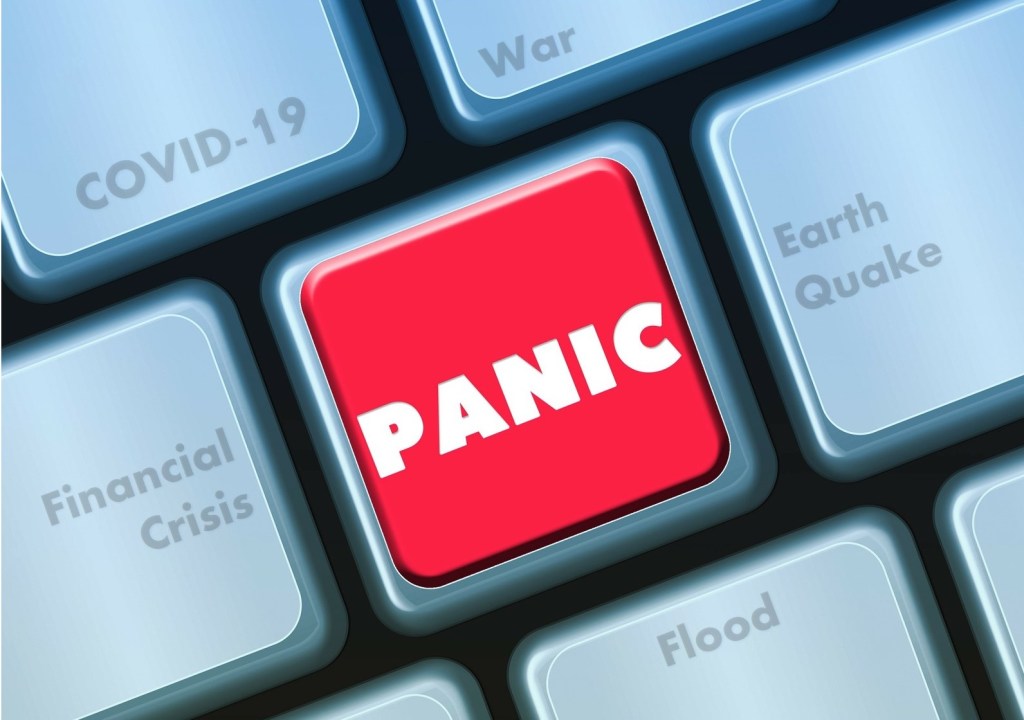
The Panic Button
In meeting the deadlines of projects, paying bills & EMIs on time, maintaining the lifestyle, future planning, we are living under tremendous levels of stress. We don’t get enough time to rest and rejuvenate ourselves. As a result, the stress levels keep snowballing inside us. When this stress is coupled with the fear factor arising out of events like a pandemic disease, it’s translated into anxiety which further causes impulsive & disorganized behavior- also called Panic.
Everyone has a different stress threshold, beyond which even a small additional amount of stress can cause panic. And panic is experienced suddenly out of the blue as if someone has pushed the button and it’s switched on- I call it The Panic Button.
The panic is infectious, it infects people faster than the pandemic disease. You might be able to avoid the COVID-19 virus, but it’s difficult to avoid the panic. And everyone has got a Panic Button-Even you.
Why do we press The Panic Button?
Humans by nature, have a strong feeling of self-preservation against any danger- perceived or actual. We want to keep a safe distance from the threat. We feel safe when we are with our family, friends, or known people. That is the reason why people flee to their home or hometown when in danger. Like it was one of the reasons (apart from unemployment/lack of food) behind thousands of people gathering at the Delhi-UP border to reach their villages amid COVID-induced lockdown in March’20.
This distance isn’t just geographical but also psychological. Like in Mar’20 when the lockdown began, people were not just afraid of getting infected by the COVID-19 virus, but also of the assumptions that there will be shortages of food & other essential items. People were afraid that the grocery stores won’t open, there will be a shortage in supply, an issue in transportation, or an irrational increase in prices. This uncertainty was one of the causes behind people pushing the panic button, leading to the panic purchase of items. Even the things that we never expected were in short supply- Like Toilet paper. All this because we want to secure ourselves from viruses and shortage of essential items.
Panic is like a fire; the more we feed it the more it grows. The stronger the fear, the worst is the outcome. When a large group of people presses the panic button together, distraught reactions are depicted even to the level of trampling each other. On September 29,2017 rumors of a short circuit or that the bridge was collapsing resulted in a stampede in the foot-over-bridge linking Parel & Elphinstone Road (now Prabhadevi) railway station in Mumbai. It killed 22 people & injured 32 others. When the bridge was inspected there was no actual structural damage to it.
What feeds this fire?
- Misinformation/Rumors can cause anxiety & panic. With COVID-19 came the avalanche of rumors & misinformation in India. Everyone is consuming more information from a variety of sources over the internet. The internet has become a breeding ground for rumor-mongers to spread fake news to the masses. Incomplete information & lag in information dissemination can cause ambiguity & uncertainty. Whereas lack of information provokes the fear of the unknown among the people. These are not well tolerated by our society and are the stepping stones towards pushing the panic button.
- Lack of trust between authorities & citizens: People do not believe in the assurances given by authorities regarding the safety and availability of essential items. It is an inherent belief that authorities try to hide or manipulate the facts to try to prevent panic conditions & most probably bad publicity. Hence, it’s always perceived that the situation is far worse than it is being communicated. That’s another reason to push the panic button.
- Herd-behavior : It’s a natural human desire to be a part of the crowd or the group. When we stop acting as individuals and start acting as a part of the group. Our decisions are influenced by the actions of the group. We are complying with herd behavior. It’s triggered by danger. If the group is on a panic-buying spree, there are high chances we will also end up doing the same. So, if the herd presses the panic button, that’s exactly what we will do.
How to avoid pressing the Panic Button?
- Take doses of information only so much you can handle: Avoid excess information consumption. Don’t believe in any social media forwards from shady sources & consume information only from authentic sources.
- Be a responsible Netizen- Spread the right information, don’t spread rumors. If you come across any rumor or rumor-monger bring it to the notice of the authorities immediately.
- Do not isolate yourself- socially: Keep yourselves engaged, spend time with your family, stay connected with your friends and relatives digitally. Keep your social support system active. Whenever you interact, don’t just talk about Corona and have variety in your conversation.
- Keep a check on binge-eating: Eat healthy foods, even a small health concern can throw you off balance at this time. It may even lead to the panic of being infected. So, taking care of your health is the top priority.
- Stay Physically Active– choose one type of fitness routine that you like and stick to it. It can be yoga, meditations, breathing or floor exercises, etc.
- Maintain a regular sleep routine, it helps maintain healthy cortisol level, thereby keeping stress & anxiety at the bay.
- Make time to unwind: Read a book, write a blog, finish a TV series, watch a movie, listen to music, learn to play a musical instrument, or whatever you like to do. Just do it & do it every day
- Manage Work from Home: Create a work routine because flexible work hours can also mean too long working hours. The ideal way is to make a routine just like an office day. Get-up & get ready, have breakfast, clock in-start working, take a lunch break, have evening tea, and at the end of the day clock-out. If possible, designate a spot as a workstation and work only from that spot, don’t convert your entire home into an office. Once the routine is made, discuss it with your spouse, parents, and kids. With their cooperation, your WFH can be less disturbing and you will be able to accomplish tasks quickly. Good luck with that!
- Lastly, the authorities need to gain the trust of the people by maintaining transparency, acting proactively on problem areas, and disseminate information at the right speed. (Probably faster than the pace of panic)
The good thing is that it’s controllable. You can control your own habit of pushing the panic button. Next time you want to push it, just try to delay it. Try to engage yourself in the above-mentioned activities. Just give it a shot. Do share with us your experience with the Panic situations? How many times have you pressed the panic button or have witnessed someone pressing the panic button? Was it really required?
 THE POINT SEEKER
Nicely narrated and depictwd things like infront of your eyes.
LikeLiked by 1 person
Thanks Chandan👍
LikeLike